Concrete patios in Roanoke, VA
A patio that drains right and stays flat.
Fire pits, outdoor kitchens, hot tub pads, a spot for the grill — whatever you're building the backyard around, the concrete under it has to be poured right the first time. Here's what that actually takes.
What goes into a patio pour
A patio isn't just a flat slab in the backyard — it has to drain away from the house, hold up to freeze-thaw, and tie in clean to steps, decks, or a covered porch. This is what we account for on every job.
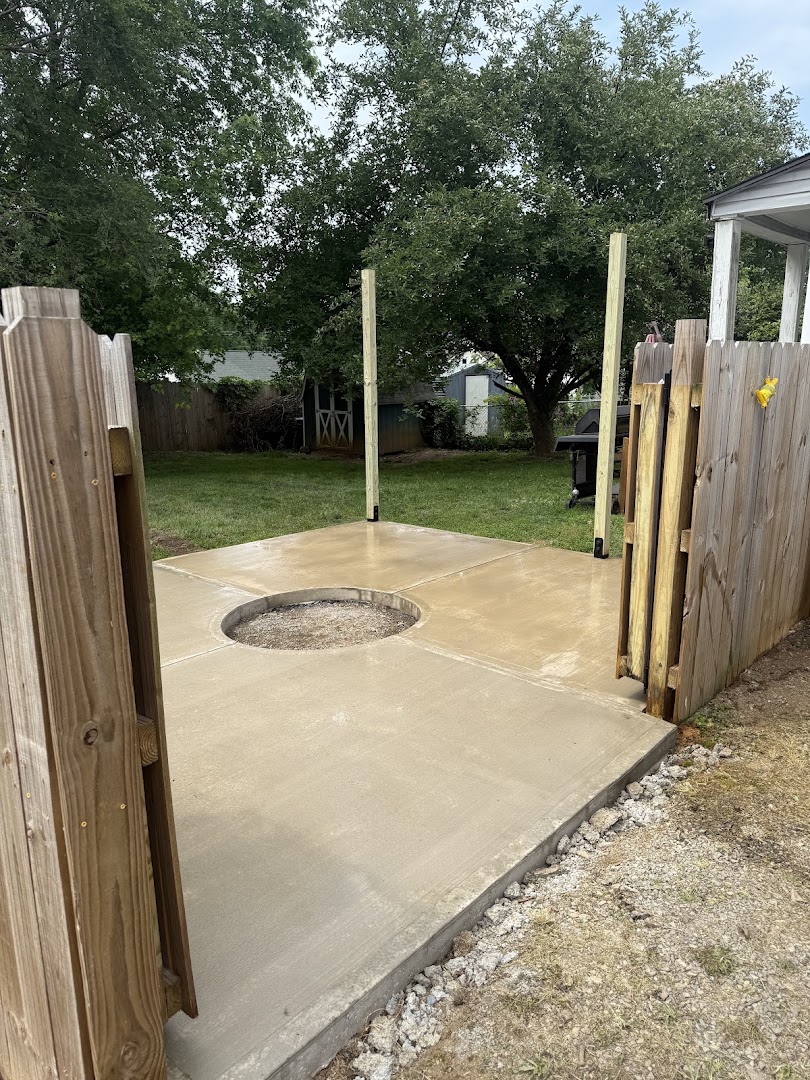
Open patios
A standalone slab poured with a slight slope, usually about 1/8 inch per foot, so water runs off the concrete and away from your foundation instead of sitting on it or draining toward the house.
Covered patio slabs
Poured under an existing or planned roofline, which changes how we form and grade it. We coordinate the slab elevation with the posts or ledger board so the finished surface lines up with the structure above it, not fought against it.
How a patio actually gets built
Most patio problems trace back to what happened before the concrete truck ever showed up. Here's the order we do it in and why each step matters.
- 01
Layout and grading check
We stake the patio and check where the water on your lot actually wants to go. Roanoke's clay soil doesn't drain fast, so if the slope is wrong here, it's wrong for the life of the patio.
- 02
Excavate and compact the base
We dig out to a consistent depth and compact a gravel base underneath. Skipping compaction is the single biggest reason patios sink, crack, or settle unevenly a year or two after the pour.
- 03
Form, reinforce, and pour
Forms set the shape and thickness, wire mesh or rebar goes in for reinforcement, and we place the concrete. Control joints get cut in at set intervals so any cracking that does happen follows a straight line instead of running wherever it wants.
- 04
Finish and cure
Broom finish for slip resistance, or smooth or stamped if that's what the design calls for. We keep the surface curing properly before anyone walks on it or moves furniture back in.
Questions before you build a patio
How thick does a patio slab need to be?
A standard patio is typically 4 inches of concrete over a compacted gravel base. Areas carrying extra weight — a hot tub, a heavy grill island — need a thicker pour and additional reinforcement, so tell us upfront what's going on the patio.
Why did my old patio crack or sink?
Almost always it comes down to what's underneath it. Poor gravel base, no compaction, or no drainage slope lets water sit under or beside the slab, and Roanoke's freeze-thaw cycle does the rest. We check the ground before we ever pour.
Do you handle the drainage, or is that on me?
It's on us. Every patio we pour is graded to move water away from your house. If your yard has a bigger drainage problem, we'll tell you before pour day, not after.
Can you pour a patio that ties into my existing deck or porch?
Yes. We measure and grade to the existing structure's elevation so the patio meets it clean instead of sitting at a mismatched height or angle.
How long before I can walk on it or set furniture on it?
Concrete needs time to cure before it takes weight and traffic. We'll give you a specific timeline for your pour based on the weather and finish, and we won't leave until we've told you what to avoid in the meantime.
Do you remove an old patio before pouring a new one?
Yes. Tear-out, haul-off, and the new pour are one job with the same crew, so you're not coordinating separate contractors.
Ready to build the backyard around it?
Tell us about the patio you want — size, layout, what's going on it — and we'll get back to you with a straight answer.
Call (540) 384-9297